

How Many Hands Your Meat Passes Through
Farm gate meat cannot skip licensed processing, and it should not. We counted the hands on both chains. The real difference is who owns the animal.
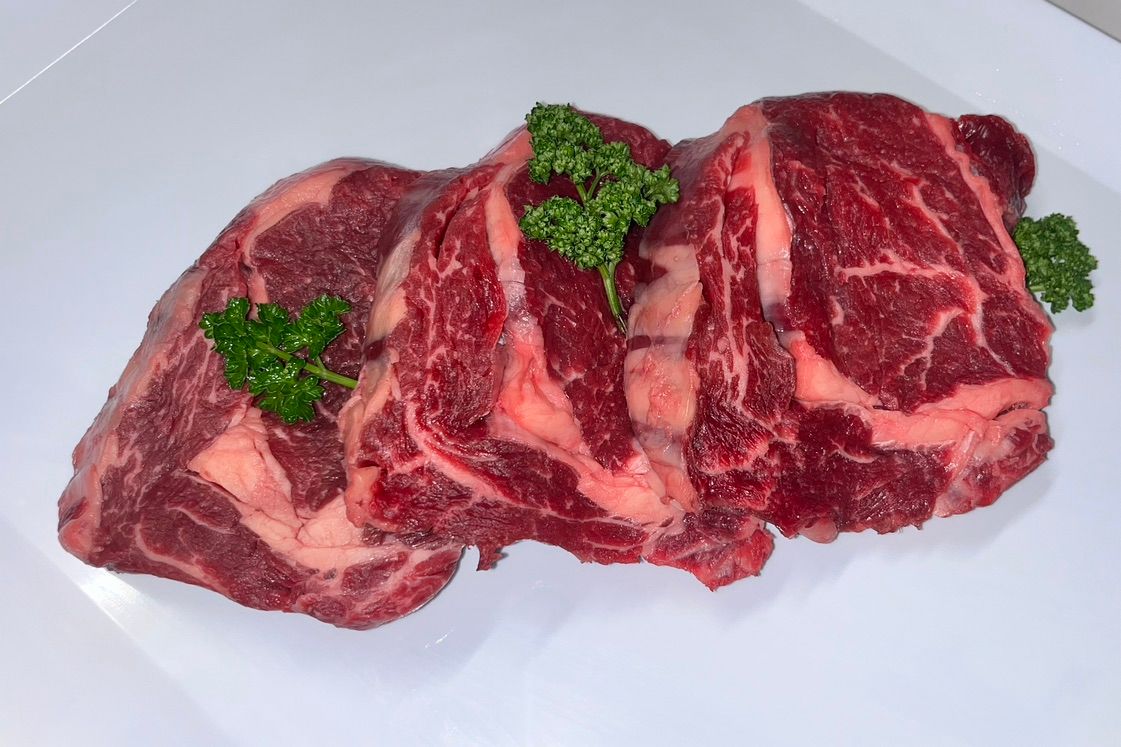
A while back we wrote that when you buy bread or eggs direct from the person who made them, there's one step between the food and you. That holds for most of what sits on a farm gate table. It doesn't hold for meat, and the reason is worth spelling out.
Meat has a step in the middle nobody's allowed to skip. An animal has to be slaughtered and dressed at a facility the state has licensed, and the person selling you the chops doesn't get to do that in a shed out the back. So the farm gate chain is short. It isn't one step, and the extra step is the part keeping the whole thing safe.
Who does the licensing depends on the postcode. PrimeSafe in Victoria, the NSW Food Authority, PIRSA here in South Australia under the state meat food safety scheme, Safe Food Production Queensland. Red meat works to Australian Standard 4696, poultry to Australian Standard 4465. And accreditation isn't a certificate on a wall. It comes with a documented food safety program and regular audits, and in South Australia the accredited operator wears the cost of those audits.
The animal doesn't always have to leave the farm, either. Victoria amended its Meat Industry Act so a vehicle could be licensed as an abattoir, and PrimeSafe licensed one in July 2020. Provenir had already been licensed by the NSW Food Authority in June 2019 to process on farms in that state. Beef Central reported on 29 July 2025 that Provenir's Chris Balazs considered the concept proven six years on, and that carcasses from the mobile unit still travel to a boning room in Geelong to be broken down and packed. So the processor can come to the animal. It's licensed, it's still rare, and it costs more.
Where the animal stops being the farmer's
We've counted the supermarket chain before, in the post about the steak that should have been graded out: paddock, abattoir, boning room, packing line, distribution centre, truck, cold room, shelf. I'm not going to run that count again. What I keep coming back to is a different question about the same list. At which step does the animal stop belonging to the person who raised it?
Early. The farmer sells. From that point every decision about what the animal becomes, how it's cut, what it gets called on the pack, what it sits beside in the cabinet, belongs to somebody else. That's not a scandal, it's just where the information starts getting thinner. Each handover writes down a bit less than the one before it, and by the shelf what's left is a grade, a weight and a country.
Some of those steps are the supermarket's own. The distribution centre is, and the store is. The abattoir and the boning room usually aren't. The big retailers contract their processing out to separate companies, which kill and bone the beef for them.
The arrangement itself isn't the difference, which I didn't expect. The trade word for paying an abattoir to do the killing while you keep the meat is a service kill, and the big chains use service kills too. ABC News reported in July 2025 that meatworks access is tightening for small producers, who are competing with the major supermarket chains and with exporters for those slots. Same mechanism, very different scale.
What the system knows and what you get told
Australia tracks livestock properly. The National Livestock Identification System ties a tag to a property identification code and records an animal's movements for its life, and the database is run by Integrity Systems Company for biosecurity, disease response and market access. It works. It's also not something you can look up. There's no terminal at the meat counter where you punch in a number and get a farm.
What you get told is set by the country of origin rules instead. Anyone selling beef, lamb, pork or chicken has to identify the country, and for unpackaged meat that can sit on a sign near the display rather than on the meat itself. Country. That's the whole requirement. The farm isn't in there, and neither is the district or the day it was processed.
The farm gate chain, counted
Farmer raises the animal. Licensed abattoir kills and dresses it on a service kill, so the carcass stays the farmer's the whole way and the farmer pays for the work as a service. Licensed boning room cuts and packs it, sometimes the same business, sometimes a butcher up the road. Then you, at the gate.
Three hands, four when the butcher is separate. The abattoir and the boning room are both licensed. And the person at the last handover is the same person who was there at the first one, which is the reason they can answer a question about the middle.
So it isn't really about fewer steps, though there are fewer. It's that nobody in the middle ever owned it. There's no one along that chain with a commercial reason to tell you less than they know.
The short chain is under pressure
None of this is settled. Nous Group published a report in February 2026, Fragility to Resilience, on local meat processing in Australia, commissioned by the Macdoch Foundation and drawing on the Australian Food Sovereignty Alliance's work. Its national producer survey drew more than 450 responses. Asked about processing access, 64 percent of the 219 small and medium producers who answered said their processor does not meet their needs or they have no access at all. Two thirds of producers surveyed said they would have no viable alternative if their current processor closed. A separate AFSA survey of 148 farmers, published in March 2025, found nearly 80 percent had lost access to an abattoir or had been told they were about to: almost 60 percent in the previous five years, and another 19 percent who knew it was coming. AFSA's January 2025 release named plants that had closed their doors to service kills inside four months. Five of them: Cowra, Booyong and Canowindra in New South Wales, Tammin in Western Australia, and Hardwicks in Victoria.
A farmer who loses the local service kill doesn't move to the next farm gate. They stop selling direct, or they sell the animal into the long chain and it disappears into it. If you like buying meat from someone who can name the paddock, what decides whether that stays possible is whether there's an abattoir nearby that will still take one animal.
Finding it
The way to find it is to search what people sell rather than who they are. Type lamb, or beef, or pork into SideStall and it matches what sellers have actually listed near you, with photos and prices. Read the stall page before you drive out, and when you get there, ask who does their processing. They'll know, and most of them like being asked.
Open the map on iPhone or Android, or have a look at sidestall.au/explore. And if you're on the other side of the gate selling meat yourself, the ordering side of it, deposits and weigh at pickup, is in selling meat by weight at the farm gate.
Sources, all checked 16 September 2026, with the abattoir access figures re-checked 25 September 2026. Licensing and standards: PrimeSafe (Victoria), NSW Food Authority, PIRSA meat food safety scheme (South Australia), Safe Food Production Queensland, and the Australian Business Licence and Information Service entries for Australian Standard 4696 and Australian Standard 4465. Mobile on-farm processing: The Land and Stock and Land, July 2020, on PrimeSafe licensing Provenir to operate a vehicle based abattoir; Farm Online, 2 July 2019, on the NSW Food Authority licence, which the authority granted on 19 June 2019; Beef Central, 29 July 2025, 'Six years on, how has the mobile abattoir concept evolved?', for Provenir's Chris Balazs on the concept being proven and for the Geelong boning room; Beef Central, 'Mobile abattoir startup Provenir eyeing Victorian opening', for Chris Balazs saying processing in a mobile abattoir would always be likely to be more expensive than processing in a standard abattoir. Supermarket processing arrangements and service kills: Beef Central, 5 September 2022, 'Service kills may represent 30pc of Australian beef processing output'; ABC News, 14 July 2025, 'Meatworks access tightens for producers competing with major supermarket chains', which reports supermarkets and exporters dominating abattoir services and an industry body disputing that producers have an access problem. Abattoir access: Nous Group for the Macdoch Foundation, with the Australian Food Sovereignty Alliance, 'Fragility to Resilience: local meat processing in Australia at a crossroads', February 2026, the AFSA media release of 15 January 2025, 'Government asleep at the wheel as national abattoir crisis deepens', and AFSA, 'Survey Report: Secure the Future of Small-Scale Livestock Farming', March 2025, for the survey of 148 farmers and the nearly 80 percent who had lost abattoir access or been told they were about to. That release named six plants; Dardanup Butchering Company is left out of the five above because it reinstated custom kills in February 2025 (ABC News, 8 February 2025, 'Dardanup Butchering Company's custom kill backflip mystery'; Farm Weekly, 'Custom kills service returns at Dardanup Butchering Company'). Traceability: Integrity Systems Company and Animal Health Australia on the National Livestock Identification System. Labelling: the ACCC guide to country of origin food labelling and the NSW Food Authority on fresh and unpackaged food.
Cover photo: L&M Ag Beef & Lamb Organically Farmed, Balhannah SA.