

Why the Honesty Box Still Works in 2026
An unlocked tin on a country road should not survive a cashless decade. It does, and what keeps it working is more interesting than good manners.
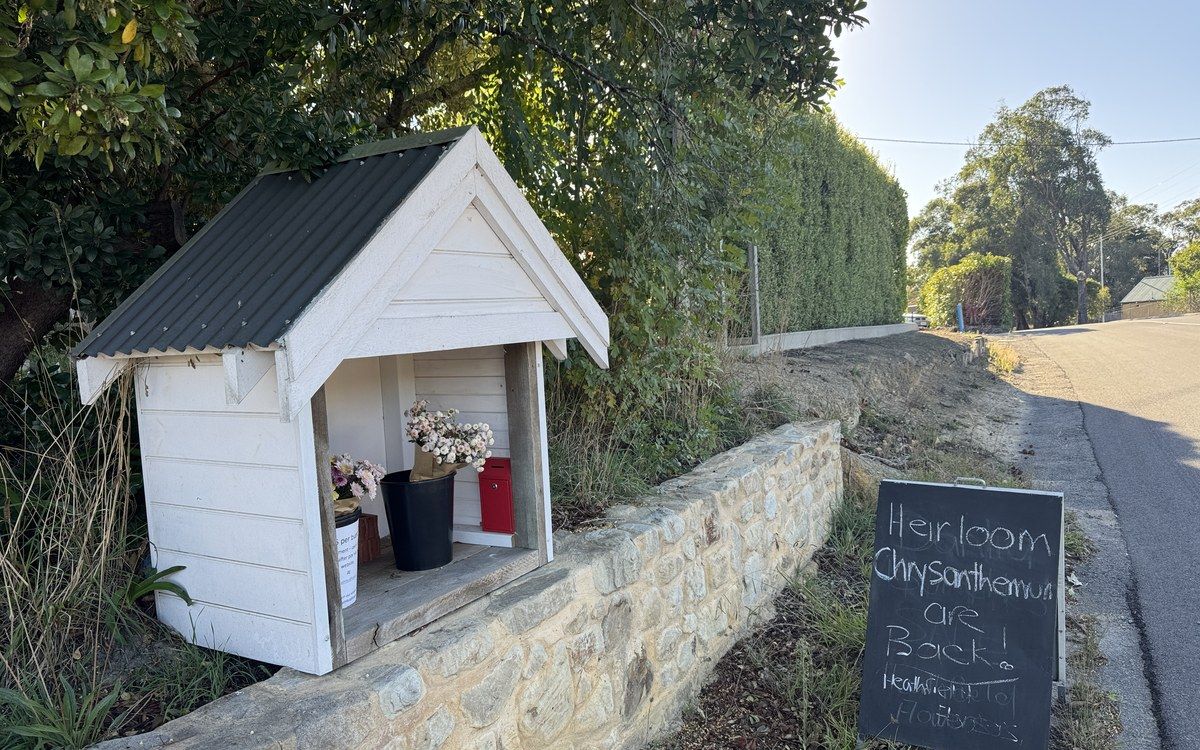
Somewhere within an hour of you there is a wooden box on a post with a tin in it, no camera, no attendant, and a bag of lemons priced in pen on a scrap of cardboard.
It should not work. We spent a decade being told cash is finished and trust does not scale, and yet the honesty box is still standing in almost every farming region in the country: pumpkins in autumn, stone fruit in summer, eggs and flowers year round, all of it guarded by nothing but the assumption that you will do the right thing.
It is worth asking why it survives, because the answer is not really about honesty.
The economics are better than they look
Start with the unglamorous part. A staffed stall costs a person's day. An honesty box costs a length of timber and a tin.
For a grower with a surplus (the tree that produced more than the family can eat, the extra rows planted on purpose), the alternative to the box is not a shop. It is compost. Against that, a box that takes most of what it is owed is enormously profitable, because the produce had no other buyer.
This is why the box shrugs off the losses it does take. A staffed stall that loses stock has lost margin. An unstaffed one has lost fruit that was heading for the chooks anyway.
It is not anonymous, and everybody knows it
Here is the part people miss when they call it a trust system. The honesty box is not a transaction between strangers.
The box sits at the front of someone's home. The buyer is almost always local, on a road they use regularly, in a car that other locals recognise, in a district where the grower probably knows their mother. Nobody is watching, but everybody could be, and more to the point, the buyer expects to come back next week and would like the box to still be there.
That is not blind faith. That is a repeated game with a small number of players, which is the condition under which cooperation is the rational strategy rather than the sentimental one. The box works because the community around it is small enough to make cheating a bad deal.
What the box is actually good at
- It costs nothing to run. No wages, no roster, no sitting in the cold for four hours to sell eleven dollars of zucchini.
- It is always open. Which matters more than it sounds, because the person driving home at 6pm is the person with money and no time.
- It asks nothing of the seller socially. Plenty of growers who would never work a market stall are happy to fill a box. Not everyone wants to be a salesperson.
- It is completely honest about what it is. There is no marketing on an honesty box. The produce is the pitch.
And the two things it cannot do
The box has exactly two weaknesses, and both are about information rather than trust.
It cannot tell anyone it exists. This is the big one. A box only sells to people who already drive past it, which means its entire market is decided by the road it happens to sit on. The best honesty box in the district, stocked with the best fruit, will out-earn nothing if it is on a lane that carries nine cars a day.
It cannot tell you whether it is worth the trip. Drive out to a box you know and you can find an empty table. After that happens a couple of times, you stop bothering. The box has no way of saying "sold out at eleven" or "plenty left".
Which is where we come in: alongside, not instead
We are not trying to talk anyone out of their honesty box. It is a good machine and it solves problems a phone cannot.
What SideStall adds is the missing information layer. Your box gets a stall page and a spot on the map, so people who have never driven your road can see that you exist and what you have. If you want to take payment in the app you can, card, Apple Pay or Google Pay, and if you would rather they keep dropping coins in the tin, your stall page in the app simply says the stall takes cash. Every stall in the app shows what it accepts.
The fee model suits a box, too: it is free to start, there is no monthly fee to take payments on any plan, and a small SideStall platform fee plus Stripe processing applies only when a buyer actually pays. On the free plan a quiet week costs you nothing.
What we suggest is unglamorous: keep the box exactly as it is, list the stall, and let the map do the one job the timber never could.
Got a box at your gate? Set up your stall →, free to start, and it takes a few minutes.
Rather find one? Download the SideStall app, free on iPhone and Android, and see the boxes and stalls near you.