

What "Free Range" Actually Means on an Egg Carton
"Free range" can legally mean 10,000 hens per hectare. Here's how to read an egg carton properly, and why the number is printed on the pack.
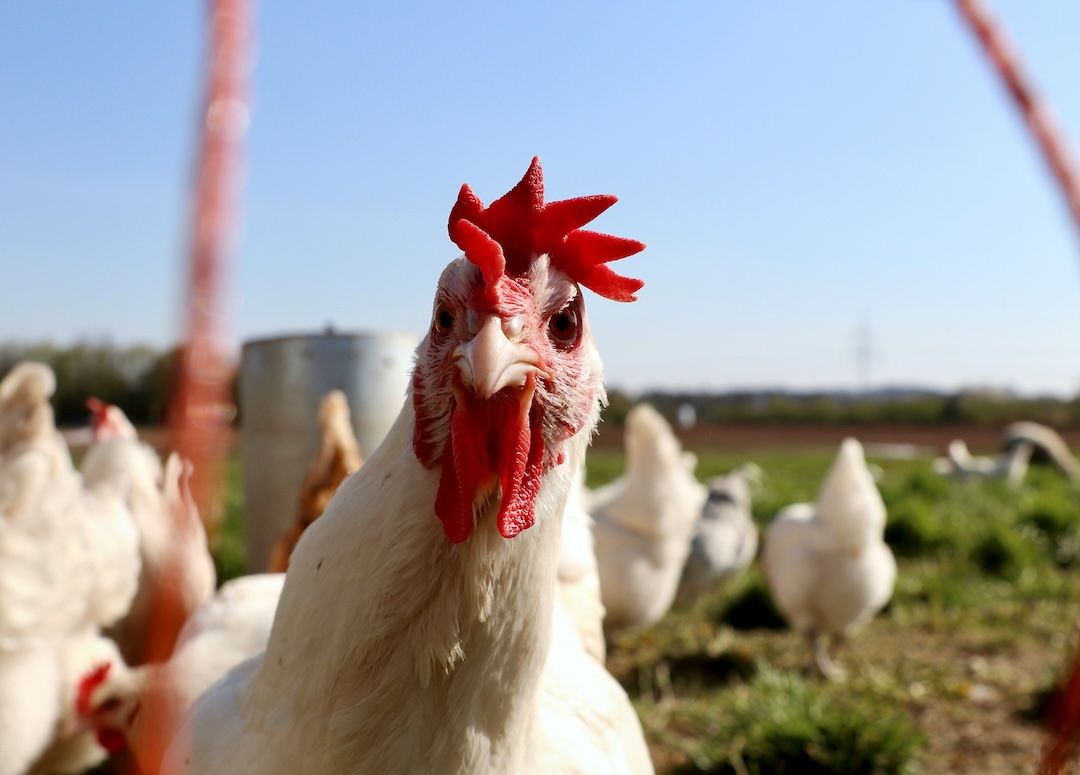
Picture free-range hens. You're probably seeing a dozen birds on a green paddock, scratching around, plenty of room.
Now here's the legal definition. In Australia, eggs can be labelled free range if the hens had meaningful and regular access to an outdoor range and were kept at an outdoor stocking density of up to 10,000 hens per hectare. Ten thousand. Per hectare. That's the standard that came into force in 2018, and it's what the words on the carton are guaranteeing you.
For comparison, the national model code of practice published in 2002 recommends 1,500 hens per hectare, less than a sixth of what the law permits. Both can be sold to you as "free range", in the same aisle.
This isn't a loophole so much as a very wide door. And the good news is that you can see straight through it, because the rules make producers print the number.
Read the number, not the words
The information standard requires the outdoor stocking density to be prominently disclosed on the packaging. So the useful move in the egg aisle is to ignore the picture of the farmhouse and find the density figure.
- Close to 10,000 per hectare, legal free range, but a long way from the paddock in your head.
- Closer to 1,500 or below, genuinely closer to what most people mean by the term.
- No density printed? Then it cannot legally carry the words free range, whatever the packaging implies.
Two more things worth knowing while you're standing there:
- "Cage free" and "barn laid" do not mean outdoors. They mean not in a cage. The hens may never go outside.
- Cage eggs are still legal. Agriculture ministers endorsed poultry standards in July 2023 that phase conventional cages out between 1 July 2032 and 1 July 2036, but each state has to write that into its own law, and New South Wales has not done it or named a date. Until then, they're still on the shelf.
The thing a carton can never tell you
Every label is a producer describing themselves to you through a regulator. It's a summary, written to be defensible, of a farm you'll never see.
Buying eggs from the person who keeps the hens skips the whole translation problem. You can ask how many birds there are. You can ask what they're fed, whether they're out during the day, when the eggs were collected. You often get to see the hens, which is a stocking-density disclosure no carton can match.
You also get eggs that have had a much shorter journey. A farm-gate egg is usually days old, not weeks, and it shows: the white holds together instead of running flat across the pan, and the yolk sits up.
One honest caveat, because it matters more with eggs than with most things: buy from someone who handles them properly. Eggs should be clean and uncracked, and kept cool. A good producer will tell you when they were collected without being asked. Most are quietly proud of it.
Finding eggs near you on SideStall
SideStall is a marketplace for the produce economy that's always run just off the main road: farm gates, roadside stalls, honesty boxes and backyard flocks with a surplus. Eggs are one of the things it does best, because eggs are what so many of the country's farm gates have always sold.
- Browse Eggs, Dairy & Honey. It's one of the categories in the app, the fastest way to see what's being sold around you.
- Or search the product. Type "eggs" or "free range eggs" and search matches what sellers have actually listed, with photos and price.
- Check who's near you and who's open. The map shows stalls near you, with sellers who are trading right now up front.
- Read the stall page before you drive. Every seller has a public page with photos and what is on the table, and the app has their hours and payment methods. Directions appear once the seller shows their address. This is where you ask the how-many-hens question.
- Pre-order if they sell out fast. Good egg stalls do. Send a request in the app and your eggs are set aside once the seller accepts. Not every stall has pre-orders switched on.
- Pay however suits. Card, Apple Pay or Google Pay in the app, or cash at the gate if the seller takes it. Each stall in the app shows what it accepts.
Not seeing anyone near you yet? New stalls come on gate by gate. Worth another look in a week, and if there's a farm gate near you that isn't on SideStall, tell them about us.
The short version
"Free range" is a legal term with a number behind it, and the number is often much bigger than the picture the words paint. The law makes producers print that number, so read it. Better still, buy from someone close enough that you can look over the fence and count the hens yourself.
Download the SideStall app, free on iPhone and Android, and see who's selling eggs near you.
Got hens and more eggs than you can use? List them on SideStall. It's free to start, and there are built-in compliance prompts for eggs as you list. Set up your stall →