

Selling Eggs at the Gate in SA: What the Rules Actually Say (2026)
Got more eggs than your family can eat? Here is what South Australia asks of you before you put a sign at the gate, and who to ring to be sure.
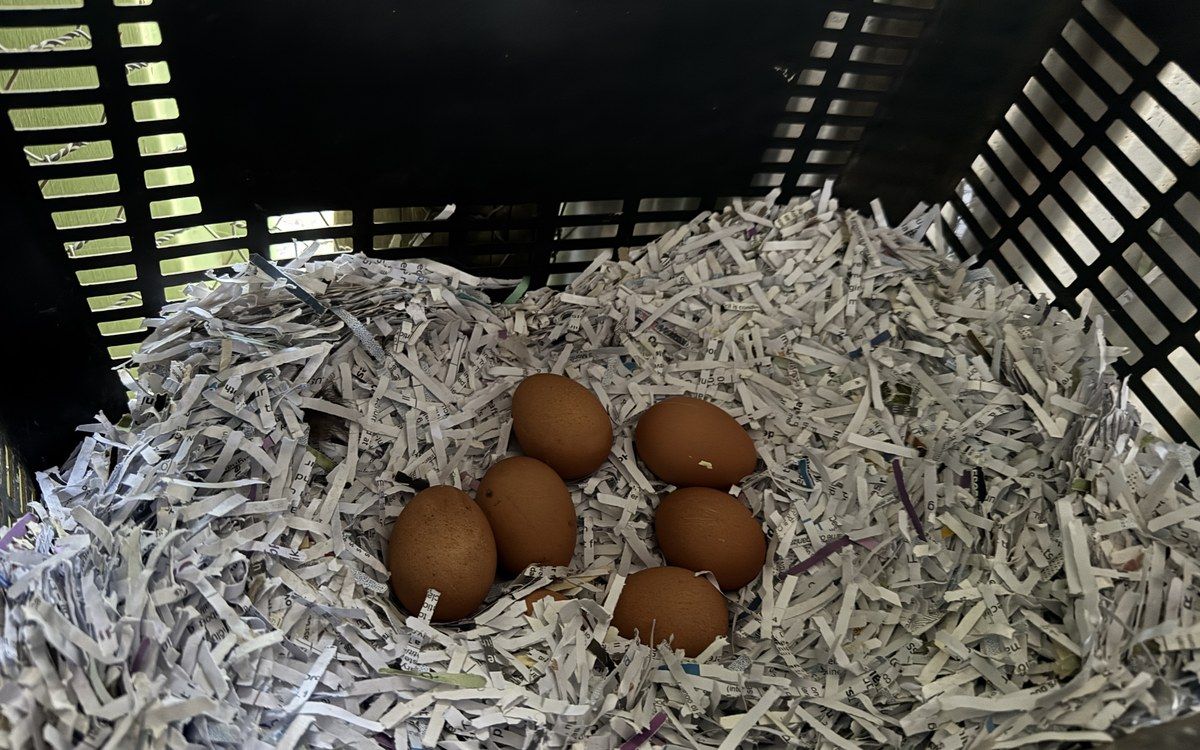
A dozen chooks will out-produce a household without much effort, and the thought follows quickly: we could sell these at the gate.
People do, all over South Australia, and it is a genuinely good little trade: eggs from up the road, still with feathers on the carton sometimes, sold for less than the supermarket charges for a worse product. But eggs are one of the more regulated things you can sell from home, and the rules are not obvious.
The good news is that the path is short and well worn. It is essentially one phone call, one decision about how you store them, and one habit at the nesting box.
The whole thing in five lines
- Selling eggs in SA sits under a food safety scheme. You need PIRSA accreditation before you start if you have more than 50 laying birds, or if you sell to a food business or another egg producer, at a market, or by wholesale.
- Giving eggs to friends and family is not selling, and none of this applies.
- Never sell a cracked or dirty egg. This is the rule that actually matters day to day.
- Keep them cool from the nest to the buyer.
- In SA every egg you sell has to carry your own identification stamp, whatever your scale, so ask PIRSA about that and about labelling while you have them on the phone.
That is the lot. The detail is below if you want it.
What do I need to do before I sell?
In South Australia, eggs are regulated as primary production under the Primary Produce (Food Safety Schemes) (Egg) Regulations 2012. That puts you with PIRSA, Primary Industries and Regions SA, rather than only your council. PIRSA draws the line at 50 laying birds. With 50 or fewer, selling only from your own gate, you do not need accreditation. Over 50 and you do. Whatever the size of your flock, you also need accreditation if you sell to a shop, cafe, hotel or bakery, to another egg producer, at a market, or by wholesale. The egg food safety standard, Standard 4.2.5, applies to you either way.
Giving eggs to friends and family is a different thing entirely and does not require any of this. It is the act of selling that brings you into the scheme.
Make the call before you make a sign. Tell them how many birds you have and that you intend to sell direct from your property, and they will tell you whether you need accreditation. If you do, there is an application fee and an annual fee scaled to hen numbers. We are not going to print figures here, because they change and a stale number in a blog post is worse than no number.
Plenty of people go through this and come out the other side selling eggs at their gate perfectly legally. It is paperwork, not a barrier.
And none of it exists to be annoying. Eggs carry a genuine salmonella risk, which is why the requirements are more specific than they are for, say, a bunch of flowers.
Which eggs am I not allowed to sell?
This one is clear-cut and worth committing to memory: cracked and dirty eggs cannot be sold. Not discounted, not "for baking", not sold.
A crack is a path through the shell for bacteria, and dirt on the shell is the thing most likely to be carrying it. If you keep chickens you already know that a nesting box checked twice a day produces cleaner eggs than one checked twice a week, so most of this problem is solved by collection habits rather than washing.
Grade out anything cracked, weeping, or visibly soiled. Those are the household's eggs now.
What about stamping and labelling?
Egg producers in Australia are subject to traceability requirements, which is why supermarket eggs carry a little printed code on each shell. That one applies in South Australia whatever your scale. PIRSA says every egg producer must comply with the egg food safety standard, Standard 4.2.5, and that standard says an egg producer must not sell eggs unless each individual egg is marked with the producer's own unique identification. Some other states exempt very small flocks from stamping, so if you are reading this from interstate, check your own regulator. Ring PIRSA to sort out what your identification should be and how to mark it.
Labelling is separate again: what has to appear on or with the carton, and what you can and cannot claim about how the birds live. "Free range" in particular is a defined term rather than a description you get to apply because your chooks look happy. If you want to use it, check what standard you are committing to first.
And if you are reusing cartons customers bring back, ask about that too. It is common practice and the rules on it are more specific than most people assume.
How should I store and sell them?
Eggs are safest kept cool and consistently so. The practical implication for a gate stall is that the honesty-box-in-the-sun approach that works fine for pumpkins is not appropriate for eggs on a hot afternoon.
Options people use: a fridge in the shed with the door left unlocked, a shaded box restocked in small quantities, or, the one we would argue for, taking orders so the eggs come out of the fridge when the buyer arrives rather than sitting out in hope.
One call covers most of it
Everything above collapses into a single conversation with PIRSA: how many birds you have, that you intend to sell at your gate, and then their answers on whether you need accreditation, and on stamping, labelling and carton reuse. Have the questions written down and it is a ten-minute call.
It is more admin than selling a box of lemons, and we would rather you heard that from us than found out later. At 50 birds or fewer, selling at your own gate, you skip accreditation, but the standard still applies to you. PIRSA's list is the stamp, grading out cracked and dirty eggs, controlling what goes in and what goes out, keeping a food safety management statement, and being able to say where your eggs went if someone asks. Get the full list off them when you call, and you end up selling legitimately rather than hoping nobody asks.
Then let people know you have them
The hardest part of selling eggs at the gate has never been the eggs. It is that the people who would happily buy them drive past at 80 and never know you exist.
That is the problem SideStall was built for. You list what you actually have that day, buyers nearby find you on the map, with one-tap directions if you show your exact address, and they can pay cash at the gate, or by card, Apple Pay or Google Pay in the app once you have finished the payment setup with Stripe. It is free to start, there is no monthly fee to take payments on any plan, and a small SideStall platform fee plus Stripe processing applies only when a buyer actually pays. In most cases nothing is charged on a cancelled or refunded order, and the FAQ covers who pays what.
Pre-orders let someone reserve two dozen ahead of time, and once you accept the request you know they are gone before you have carried them up to the gate.
Ready when you are: set up your stall →, free to start.
Looking for eggs rather than selling them? Download the SideStall app, free on iPhone and Android.
General information about how the rules work, not legal advice. PIRSA and your council are the current authorities, and requirements change.