

2. Listing a Product Properly, and Why You Should Hit Refresh
Your listings are how buyers find you, because search matches products rather than stall names. Here is how to write one well and keep it visible.
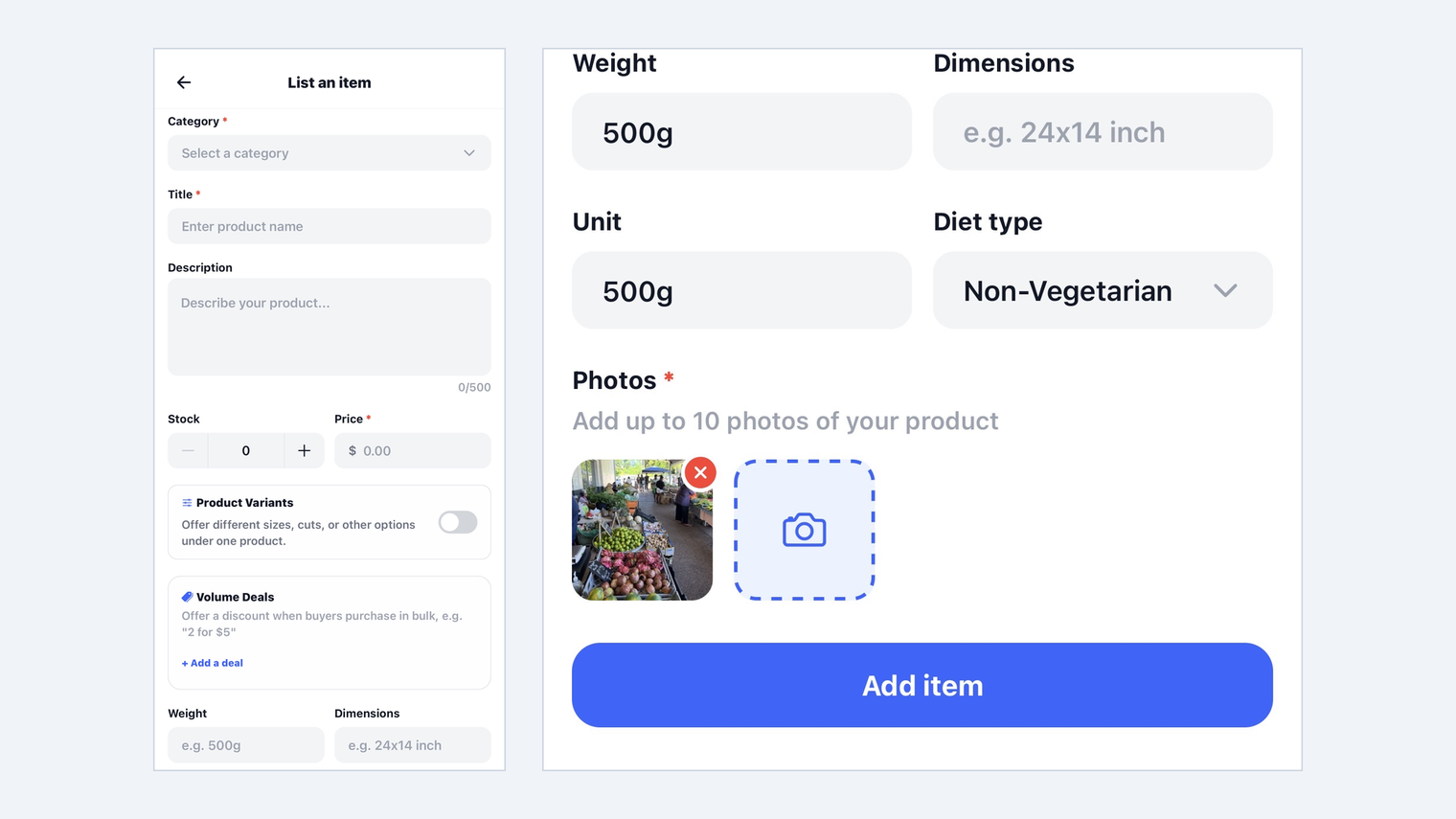
There is a version of a SideStall listing that takes thirty seconds and does almost nothing, and a version that takes three minutes and brings people up your driveway. The difference is mostly in the photo and the first four words.
This post covers writing one properly, and the button that keeps you visible afterwards.
Why listings matter more than your stall name
Here is the thing that surprises people. When a buyer searches on SideStall, the search looks at what you have listed. Someone typing "eggs" finds sellers with eggs on the table. Typing the name of your stall does not find you.
So your listings are not a catalogue you fill in after the important work. They are the important work: they are the words a stranger three suburbs away is typing when they go looking for what you sell.
Which means one thing above all: call things what people search for. "Eggs" finds more people than "Backyard beauties". You can be charming in the description. Be literal in the name.
Listing something well
A listing takes about two minutes. The form asks for a category, a title, a description (up to 500 characters), your stock, a price and up to ten photos, plus the optional details that matter for what you sell: weight, dimensions, unit, and a diet type dropdown if it applies.
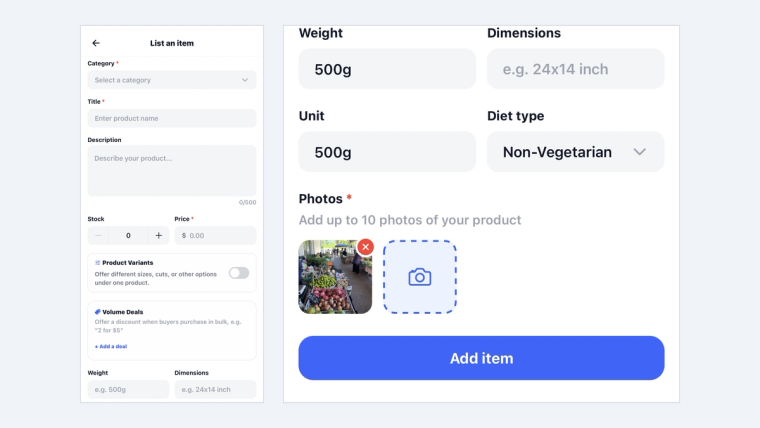
Five things worth getting right:
- The photo is the whole thing. Take it outside in daylight, on the table where you actually sell. Do not style it. A real tray of eggs beats a magazine photograph, because the buyer is deciding whether you are real.
- Use the plain name first. "Sourdough loaf" then whatever you call it. Search rewards the ordinary word.
- Price it in the app even if they pay cash. A listing with no price makes people wonder, and wondering is enough to keep driving.
- The unit is what your price is for: 500g, dozen, bunch. Buyers see it next to the price, and the app adds the "per" for you, so skip "per" and just write the unit.
- Set the stock honestly. Running out is fine and normal. Someone arriving to find nothing is what stops them coming back. One mechanic to know: 0 shows as out of stock, so if you do not track stock, set a high number (e.g. 9999) rather than leaving it low.
You can edit or delete anything later, so do not agonise. A listing up today beats a perfect listing next weekend.
The refresh button, and when to hit it
Nearby discovery favours things that are fresh. A stall that has sat untouched for weeks quietly sinks down the list, even if the produce on your table is an hour old.
The fix is one button, and it lives on Manage stall rather than on the listing itself: Refresh listing, which reads "Bump your stall to the top of nearby buyer discovery." It even tells you how long you have left it ("Last refreshed 5 days ago"). One tap bumps your whole stall, not just a single product; it costs nothing, and it is the single cheapest thing you can do to be seen more.
If a listing sits untouched for a while, the app will nudge you with a reminder, but don't wait for it. The habit worth building is refreshing on the morning you actually pick or bake. That way "freshest" in the app and freshest on the table mean the same thing.
What this changes
Two listings written properly, with the stall refreshed on trading days, will out-perform twenty written carelessly and left alone. The buyer is not comparing you to other stalls. They are deciding whether it is worth leaving the house. A clear photo, a plain name and a price answers that.
Ready to put it into practice? Your stall is free to start at sidestall.au.
Next in this series: telling people you are open today, which is the other half of getting found.