

Can't Find Australian-Grown on the Shelf? Skip the Shelf.
Shoppers are hunting supermarket shelves for Australian-grown food and coming up empty. At a farm gate, the country of origin is standing in front of you.
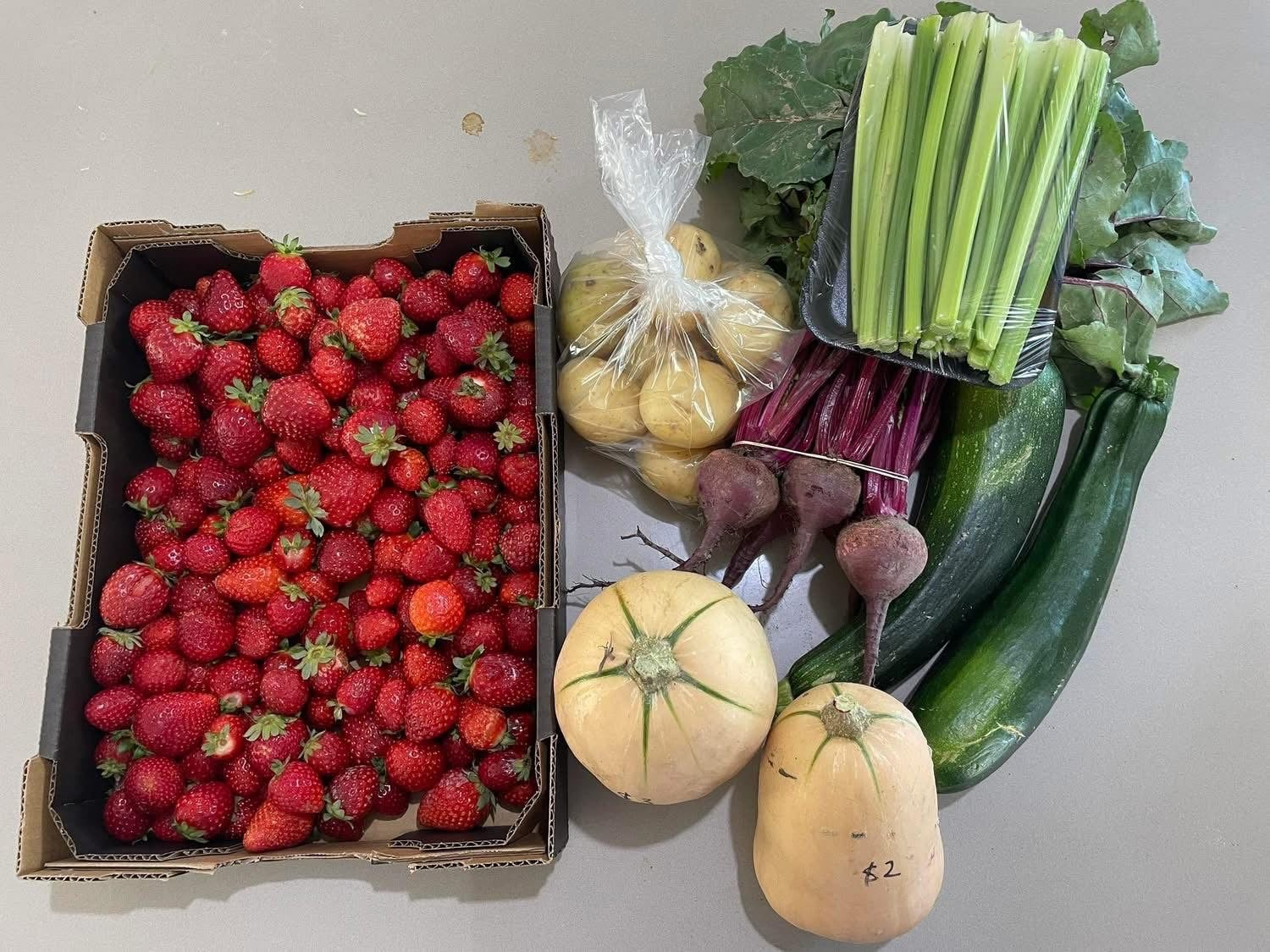
This week we watched a comment thread fill up under a post about groceries. One shopper had gone looking for Australian peanut butter at the supermarket and come up empty. "I want Aussie beetroot, pineapple, garlic, fruit and vegetables," they wrote, and the replies were full of people saying the same thing.
It's a fair complaint. It's also not really about peanut butter. It's about standing in a shop in a country that grows extraordinary food, and having to work hard to find any of it on the shelf.
The bar chart test
Since mid-2018, priority foods grown, produced or made in Australia have carried a country-of-origin panel: the kangaroo in a triangle, and a bar chart showing what percentage of the ingredients are Australian. Priority foods are most of the trolley, per the ACCC: fruit and veg, meat, bread, milk, juice, sauces, honey, nuts, cereal. Biscuits, confectionery, tea, coffee, soft drinks and alcohol are not, and imported food never carries the kangaroo, so those get a line of text instead. It's a genuinely useful system, once you know how to read it.
Because the words matter more than the kangaroo. Grown in Australia or Produced in Australia on a priority food is the strong claim: every ingredient has to be Australian. Made in Australia is weaker: the product was transformed here, but the ingredients can come from anywhere, which is how "Made in Australia from at least 10% Australian ingredients" ends up being a real sentence on real packets. Packed in Australia tells you less again.
So yes, you can defend your trolley with the bar chart. But notice what that asks of you: homework, on every jar, every tin, every bag, every time. Shopping for Australian food in Australia shouldn't feel like sitting an exam.
Why the shelf fights you
None of this is a conspiracy, and most of it is labelled exactly as the law requires. It's structure.
A supermarket sells the same lines all year round. Australian growing seasons don't work like that, so imports fill the gaps, and then, often, the shelf. And for a lot of processed staples, the factory that used to fill the tin here closed years ago, so even a crop we grow well can leave and come back in a packet.
The system is built to deliver consistency and price. It does that well. It just was never built to keep your trolley Australian, which is why shopping harder inside it only gets you so far.
The place where origin isn't a puzzle
There is one place where country-of-origin needs no logo: the farm gate. The country of origin is the paddock you parked next to. The "producer" on the label is the person putting your beetroot in the bag.
We'll be honest here the same way we were in our food-fraud post: nobody at SideStall tests or certifies anyone's produce, and we won't pretend otherwise. What buying direct changes is structural. There's one step between the soil and you, no blending or relabelling in between, and a grower who has to look you in the eye next week. You can ask what variety it is and when it came out of the ground, and people who sell at their own gate are usually delighted to be asked.
The gate has seasons, of course. That's not a flaw, it's the proof. Garlic comes in its season: buy a braid when it does and it keeps for months. Beetroot comes in bunches with the dirt still on. And no, a farm gate won't fix the peanut butter aisle. It doesn't have to. Fruit, veg, eggs, honey, garlic, herbs. A surprising amount of the trolley can come from someone whose name you know.
Finding the growers near you
The growers were never the missing piece. They're down side roads behind hand-painted signs, and you drive past at 80 and never know. That's the problem SideStall was built for.
- Open the map. SideStall shows the stalls near you by distance, with sellers who are open now up front: farm gates, roadside stalls, honesty boxes.
- Search the product. Type "garlic", "beetroot" or "strawberries" and search matches what sellers have actually listed, with photos and prices.
- Read the stall page before you drive. Every seller has a public page with photos and what is on the table, and the app has their hours and payment methods. Directions appear once the seller shows their address.
- Pre-order the small-batch stuff. Good producers sell out. Send a request in the app, the seller says yes or no, and once they accept it's set aside for you.
- Pay the way the seller has set up. Cash at the gate, or card, Apple Pay or Google Pay in the app where the seller has turned on in-app payment. The app shows what each stall takes.
- Favourite the good ones. Once you've found a garlic grower you trust, they're one tap away, no bar chart required.
No one near you yet? SideStall grows gate by gate, so it's worth another look in a week, and if you know someone local who grows, bakes or keeps chooks, send them our way.
The short version
That commenter's frustration is real: on a supermarket shelf, "Australian" is a puzzle you solve one label at a time. At a farm gate, it isn't a claim at all: it's the ground under your feet and the person in front of you.
Buy what you can buy direct. It won't cover the whole trolley. It doesn't have to.
Download the SideStall app, free on iPhone and Android, and see who's growing near you.
Grow it, bake it or raise it yourself? List your stall on SideStall. It's free to start, and there's no monthly fee to take payments on any plan, including Free. You only pay a small SideStall platform fee plus card processing when a buyer actually pays in the app. Set up your stall →